The Ultimate Faceless Video Strategy: Grow Your Brand Anonymously in 2026
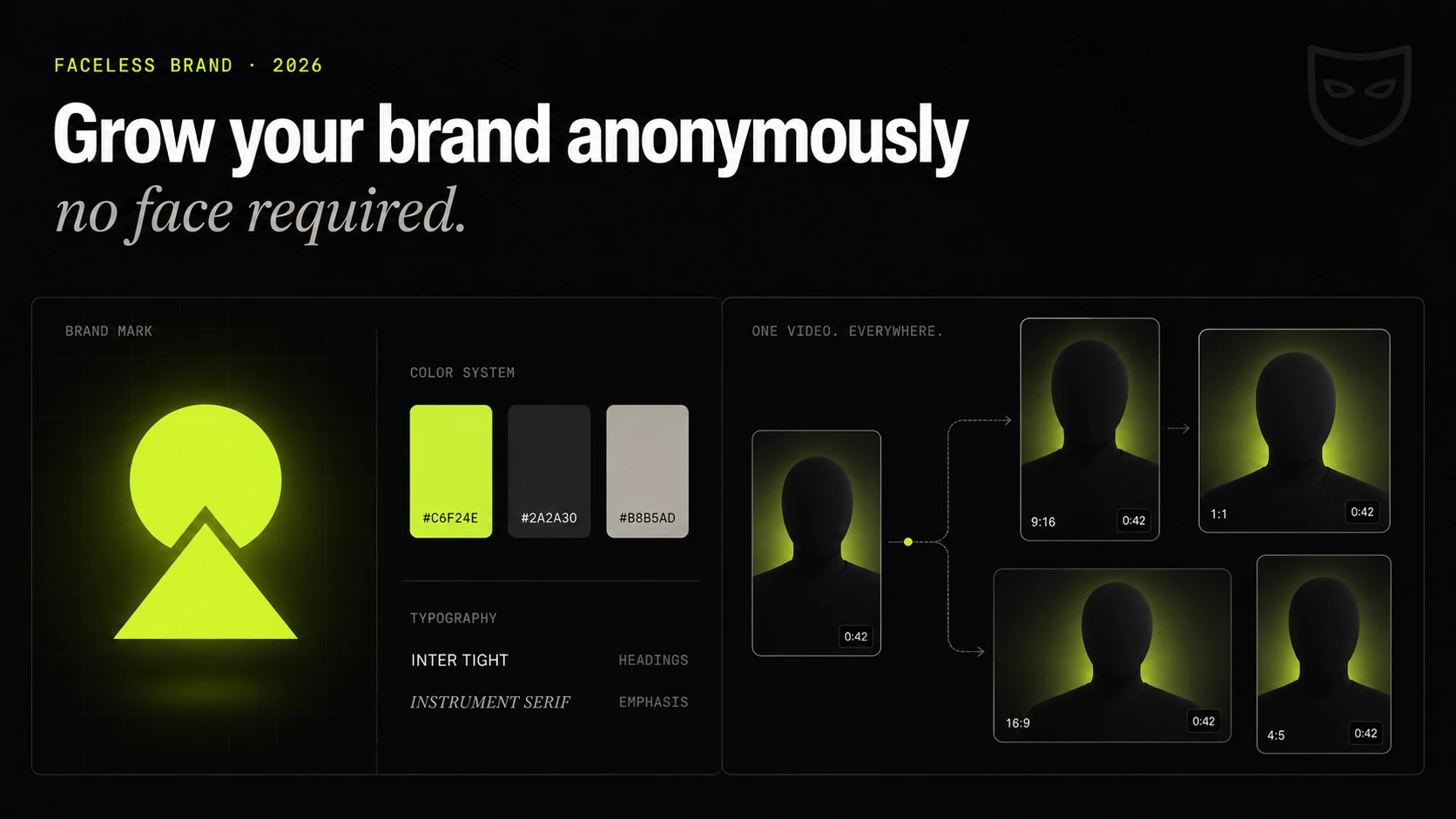
In 2026, trust is shifting away from faces and toward values and consistency. Anonymous brands like Factinate (history facts) and Lofi Girl (study music) have built devoted followings without a single CEO interview or vlog.
What is a faceless brand?
A faceless brand is a business or creator that builds an audience through videos, podcasts, or articles without revealing who is behind it. It runs on consistent quality, a recognizable visual style, and a steady voice instead of a personality.
The upside is real. There is no single point of failure, so you can sell the channel later. A team can produce the content instead of one person. It is safer from harassment, which matters in touchy niches. And the footage is easy to repurpose across platforms.
How do you pick a niche for a faceless brand?
Some niches are built for faceless content and some fight it. Here is roughly how they sort out.
- True crime: excellent. Long-form plus Shorts, in the style of Dark History.
- Coding tutorials: excellent. Screen recordings, like Web Dev Simplified.
- Financial education: good, once you add charts, in the style of Two Cents.
- Personal vlogging: basically impossible without a face.
- Product reviews: good if you show only the product, like an unboxing with text.
- Meditation and ASMR: excellent. Ambient visuals, like Relaxing White Noise.
To sanity-check a niche, search YouTube for it plus "no face" or "faceless." If you find channels with 10,000 or more subscribers, it works.
How do you build a faceless brand identity?
Without a face, you need other anchors that make you recognizable.
A visual style guide
Use the same three or four colors across every thumbnail, intro, and caption. Pick two fonts, one for titles and one for captions. Keep the intro animation to three seconds with a short sound logo.
A voice signature
Use the same AI voice in every video. ElevenLabs can clone a voice and adjust its pitch, and ClipFarmer lets you lock a voice to a project so it stays consistent.
A logo or mascot
A simple icon, an animal, a shape, or a letter, in the corner of every video. Over time people tie it to your brand without thinking about it. Kurzgesagt does this with a bird and a warm palette, and the brand is instantly recognizable with no face anywhere.
What are the key elements of a faceless brand identity?
A consistent color palette, a single voice (real or AI-cloned), a memorable logo or mascot, and a repeatable intro and outro. Together they do the job a human face usually does.
How do you batch faceless content?
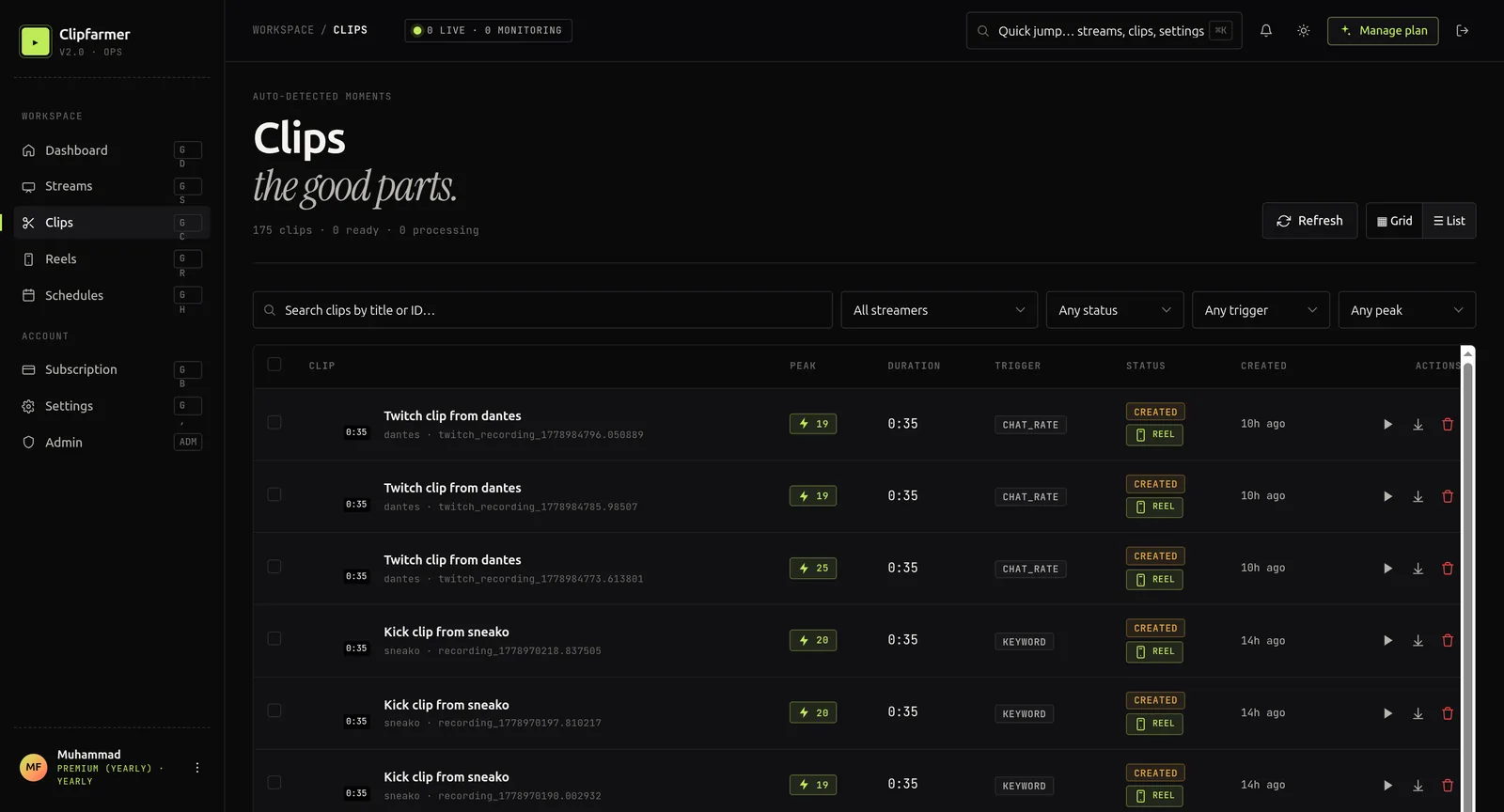
Faceless production is template-friendly, which is exactly why it scales. Build a few master templates in ClipFarmer and reuse them.
A listicle template (top 5, 10 facts) opens with an animated title card, gives each fact 10 to 15 seconds over a stock clip with a text overlay and a checkmark sound, and closes with a subscribe animation.
A tutorial template uses a screen recording with zoom effects, a voiceover walking through each click, and captions for the shortcuts.
A storytelling template follows the four-scene structure from earlier, with the music swelling at the turn.
A one-person week might look like this: script ten videos with AI on Monday, record all the voiceovers in one sitting on Tuesday, apply templates and swap in visuals on Wednesday, export and schedule on Thursday, and review the numbers on Friday. That rhythm can produce 30 or more faceless videos a week from a single creator.
How often should a faceless brand post?
For short-form (Shorts, Reels, TikTok), once or twice a day. For long-form (eight minutes or more), two or three times a week. Consistency beats volume, and batching is what keeps the quality up while you stay consistent.
How do you distribute one video across platforms?
Faceless content is unusually easy to repurpose. Take one 60-second video and reshape it.
- YouTube Shorts: keep the original 9:16 vertical; the algorithm pushes fresh Shorts.
- TikTok: add a trending audio overlay to improve your shot at the For You page.
- Instagram Reels: crop to 1:1 and add stickers, since Reels get prioritized.
- Pinterest: pull three key frames into Idea Pins for evergreen search traffic.
- LinkedIn: drop the music and keep captions only for a more professional tone.
ClipFarmer's one-click repurpose exports all four aspect ratios plus the frame grabs in a single pass.
How do faceless brands make money?
You don't need a face to earn from video.
Ad revenue
The usual thresholds apply: the YouTube Partner Program needs 1,000 subscribers plus 4,000 watch hours or 10 million Shorts views; the TikTok creator program wants around 10,000 followers and 100,000 views in 30 days; Facebook in-stream ads need about 10,000 followers.
Affiliate marketing
Promote products visually. Show a clip of the item with a text overlay and a link, like "the microphone I use," with no face required. Tech, gaming, home office, and fitness gear tend to convert best.
Digital products
Sell stock-footage packs you made with AI, offer faceless video templates (ClipFarmer has a marketplace for them), or run a paid newsletter with behind-the-scenes material.
Sponsorships
Brands care about reach and engagement, not faces. A faceless channel with 100,000 loyal subscribers can charge $3,000 to $5,000 for a sponsored segment.
Can a faceless brand get sponsors without showing a face?
Yes. Sponsors look at audience fit and engagement. Send them a media kit with your average views, retention, and audience demographics. Faceless channels regularly land deals with software, finance, and education companies.
How do you avoid algorithm penalties?
Some creators worry that faceless videos get flagged as reused content. A few habits keep you clear.
- Add an original voiceover instead of the generic text-to-speech everyone else uses.
- Change up the stock footage. Don't reuse the exact clip everyone has; flip it, crop it, or layer text on top.
- Add real value. A silent compilation of cat videos is low quality; a narrated video explaining cat behavior is not.
- Generate at least 20% of your visuals with AI so they are genuinely unique.
ClipFarmer includes an originality score that checks your video against common stock libraries. Aim for more than 70%.
What growth tactics work in 2026?
Collaborate with other faceless channels
Run a shout-out swap where each channel mentions the other in a description or end screen.
Build series and playlists
"Part 1 of 5: History's Greatest Mysteries" gets people binge-watching, which lifts your watch time and channel authority.
Use community posts
Poll your audience with something like "what faceless topic should we cover next?" The engagement itself is a signal to the algorithm.
Embed videos on your own site
Search engines index embedded videos. Drop a relevant faceless video into each blog post on your site to keep visitors around longer and reinforce your own pages.
The takeaway
You don't have to be an extrovert or a film-school graduate. With ClipFarmer, a clear visual identity, and a batching system, you can build a profitable faceless brand.
A 30-day launch plan: week one, choose a niche and create a style guide; week two, batch 20 scripts with AI; week three, produce and schedule 20 videos; week four, read the metrics and double down on what works. The algorithms reward the people who start and keep going.