Faceless Video Marketing: The Complete Guide for Brands & Creators in 2026
Faceless video marketing means making video content without putting a person on camera. Instead of a presenter, you build the video from stock footage, animation, text overlays, screen recordings, AI visuals, and a voiceover that can be real or synthetic.
In 2026 this is no longer a fringe tactic. It is how a huge number of serious channels operate. Kurzgesagt built an animated education business this way, and plenty of "top 10" style channels have grown into real companies without ever showing a face.
So why is faceless content everywhere right now? A few reasons stack up at once.
- Privacy. Viewers are wary of facial recognition and how their data gets used, and creators like keeping their personal life out of it.
- Lower cost. No camera, no studio, no on-camera talent to pay.
- Scale. AI tools like ClipFarmer let you produce dozens of videos in an hour instead of one a day.
- Reach. AI voiceovers and subtitles let the same video work across languages.
What is faceless video marketing?
It is a content strategy where videos are built from stock footage, text, AI visuals, and voiceover instead of a live host. It cuts production cost, protects your privacy, and still drives strong engagement.
Why do faceless videos work?
The viewer focuses on the message
With no face on screen, the audience pays attention to the actual value: the information, the story, or the emotion in the visuals and audio. Nervous habits, lighting problems, and how the presenter looks stop mattering.
Mystery pulls people in
Channels like Dreamscape or The Paint Explainer do well partly because viewers wonder who is behind them. That curiosity keeps people watching and pushes them to comment, and both signals help you on most platforms.
It lowers the judgment barrier
People scroll past face-first videos when the creator does not strike them as trustworthy in the first second. Faceless content skips that snap judgment. The idea has to stand on its own, which is usually a good thing.
It fits short attention spans
Short-form platforms reward fast pacing. A faceless video can cut between clips, animation, and text every two or three seconds, which is almost impossible to pull off with a talking head.
Do faceless videos really work for business growth?
Yes. Plenty of faceless channels on YouTube and TikTok have passed a million subscribers by focusing on storytelling and usefulness. The missing face is rarely a problem when the content is genuinely helpful or entertaining.
Which platforms reward faceless content in 2026?
Faceless content travels well, but each platform has its own sweet spot. Here is where each format tends to land.
- YouTube Shorts. Fast tutorials, listicles, and quizzes do best, and the algorithm leans on high retention, ideally past 80%.
- TikTok. CapCut templates and AI story videos thrive, and shares and replays carry the most weight.
- Instagram Reels. Motivational quotes and before-and-after clips perform, with saves and comments driving reach.
- LinkedIn. Data visualizations and industry insights work, and dwell time is what counts.
- Pinterest. Step-by-step Idea Pins get found, and fresh pins keep showing up in search.
One practical tip: ClipFarmer exports in every native aspect ratio, 9:16, 16:9, and 1:1, so you can cross-post the same video without re-editing it for each platform.
How do you start faceless video marketing step by step?
Choose your niche
Not every niche suits faceless content equally. The ones that consistently work in 2026 include history and unsolved mysteries, tech tutorials built on screen recordings, personal finance with charts and stock clips, fitness demos that never show a face, and pet content carried by voiceover.
Gather your assets
Without a presenter, the assets do the heavy lifting. You will want stock footage (Pexels, Pixabay, Canva, or AI-generated clips from Runway ML), background music (Uppbeat, Pixabay, or ClipFarmer's built-in library), an AI voiceover (ElevenLabs, or ClipFarmer's text-to-speech), and text overlays to highlight key points and build a little tension.
Write for a faceless format
Your script has to be visually descriptive. Instead of "I think you'll like this," write something the visuals can follow, like "Imagine a world where..."
Here is the style in practice: "In 1977, a radio signal lasted 72 seconds. Nobody knew where it came from. (Show static animation.) Scientists called it the Wow! signal. (Text appears: WOW! SIGNAL.) We still don't have an answer."
Produce it with ClipFarmer
- Paste your script into ClipFarmer.
- Select Faceless Mode for automatic scene matching.
- Pick an AI voice and a background track.
- Render and publish.
Optimize for search and for the feed
Title, description, and tags still matter. For the title, pair your main keyword with an emotional hook. "History Facts" is weak; "Why a 72-Second Signal Still Baffles Scientists" gives people a reason to click. Write a description of at least 200 words, add timestamps, and answer the basic question of what the video is about. Then use 10 to 15 long-tail tags like facelessvideo and educationalshorts.
What faceless video mistakes should you avoid?
Most faceless videos fail for the same handful of reasons. Here is what goes wrong and how to fix it.
- Generic stock footage kills retention. Use clips that actually illustrate each sentence instead of vague filler.
- A robotic voice makes people leave. Use expressive AI voices; ClipFarmer offers emotion-tagged text-to-speech.
- No branding means nobody remembers you. Add a consistent intro animation and color palette.
- Skipping captions costs you the 85% who watch on mute. Always burn captions in.
Can you monetize faceless YouTube videos?
Yes. YouTube allows monetization for faceless content as long as it adds educational or entertainment value and does not break the reused-content rules. Many faceless channels earn through AdSense, sponsorships, and affiliate links.
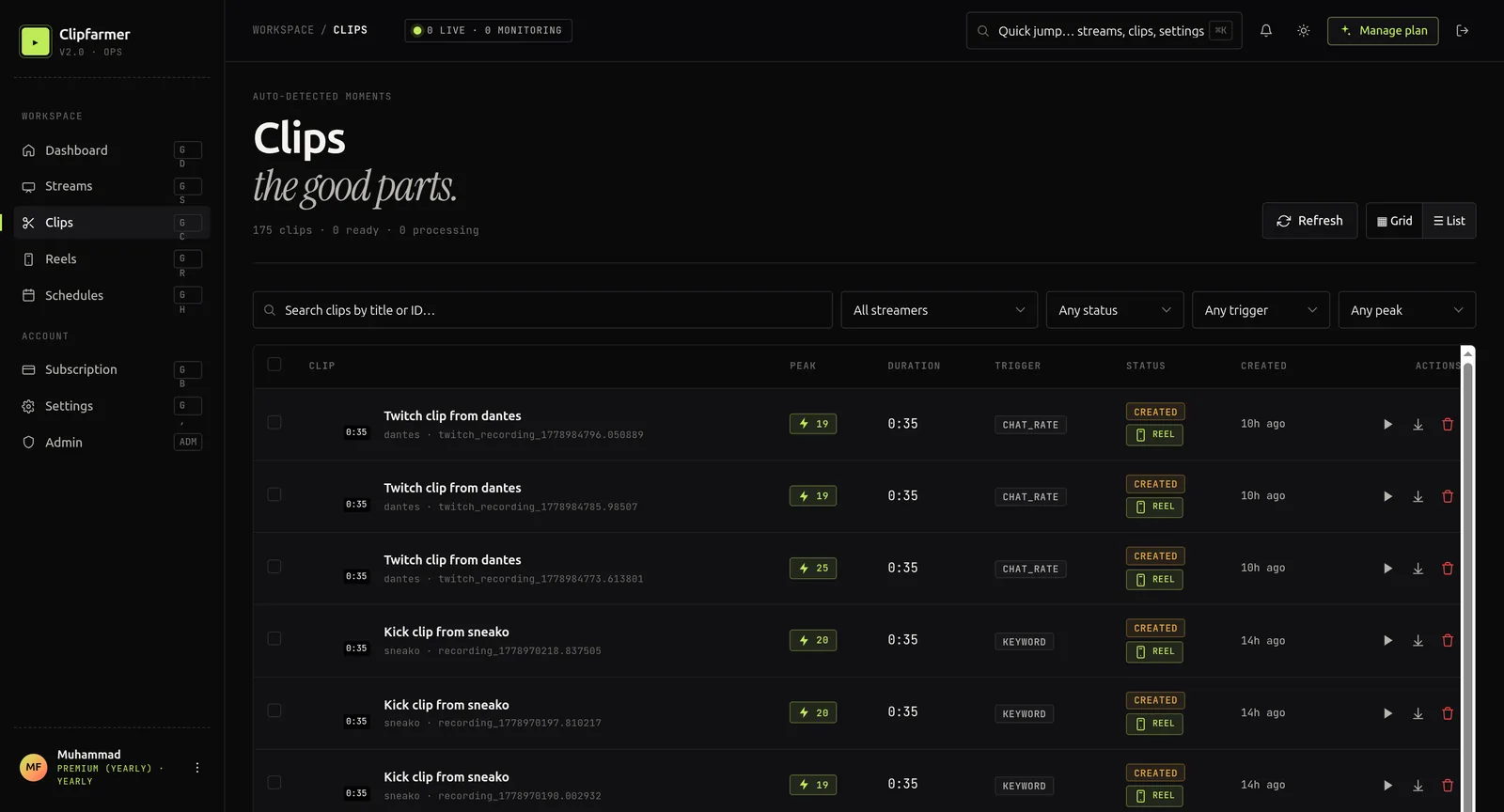
How do you scale faceless video with AI?
By 2026, AI does far more than read text aloud. A typical workflow chains a few tools together.
- Script generation with ChatGPT or Claude. Prompt it with something like "write a 60-second faceless script about ancient Rome."
- Image and video generation with Midjourney and Pika Labs to create visuals no stock library has.
- Voice cloning in ClipFarmer so you can use your own voice without recording every line.
- AI translation to dub the same faceless video into 20-plus languages.
A realistic example: a faceless finance channel used ClipFarmer to produce 50 videos in a single weekend. Three months later it had passed a million total views and was making around $4,000 a month from affiliate links.
Which metrics actually matter for faceless videos?
Raw view count is a vanity number. These tell you more.
- Average view duration. Aim for more than 70% on Shorts and Reels.
- Replay rate, which matters most for tutorials.
- Click-through rate from the thumbnail. Faceless thumbnails need bold text and high contrast to compete.
- Saves and shares, which tell the algorithm the video was worth keeping.
ClipFarmer's analytics dashboard shows you which scenes cause people to drop off, so you can cut the dead weight next time.
The takeaway
Faceless video is past the experimental stage. With AI tools like ClipFarmer, any creator or brand can ship high-quality videos without a camera or a studio. Focus on value, optimize for retention, think the way the algorithm does, and stay consistent.